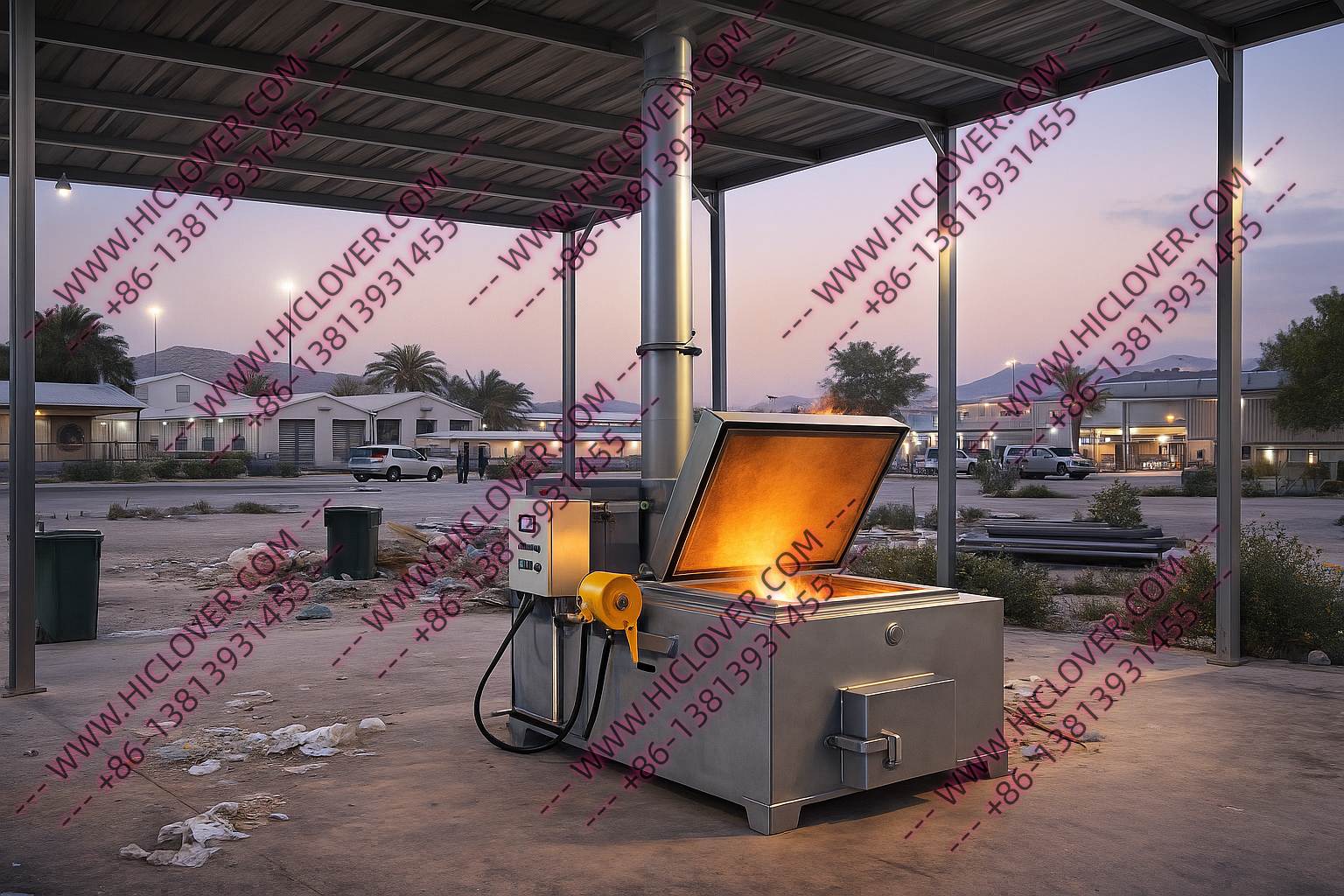
What Temperature Should a Medical Incinerator Reach? Technical Standards, Engineering Logic, and Modern Modular Solutions
What temperature should a medical incinerator reach? This question appears frequently in hospital procurement searches, regulatory audits, and environmental engineering discussions. The related long-tail query what temperature should a medical incinerator reach for safe disposal reflects growing global concern over infection control, emission compliance, and ESG-driven waste management.
Temperature is not simply a numeric specification. It defines pathogen destruction efficiency, toxic compound breakdown, ash stabilization, and emission control stability. In modern healthcare infrastructure—especially after pandemic-driven medical waste surges—the thermal regime of an incinerator has become a compliance benchmark rather than a design preference.
Understanding what temperature should a medical incinerator reach requires examination of combustion chamber architecture, regulatory guidance, waste composition variability, and flue gas treatment design. It also demands evaluation of automation logic, fuel configuration, and containerized deployment models increasingly adopted in decentralized treatment strategies.
Primary and Secondary Chamber Temperature Requirements
When evaluating what temperature should a medical incinerator reach, the answer depends on chamber function and waste category.
Primary Combustion Chamber
The primary chamber, where solid medical waste is directly burned, typically operates at:
-
800°C to 900°C for general infectious waste
-
Up to 1,000°C for pathological or high-calorific waste
At this temperature range:
-
Organic pathogens are destroyed
-
Plastics begin to oxidize effectively
-
Volume reduction reaches 80–90%
-
Moisture is evaporated prior to full combustion
A properly engineered controlled-air incineration system ensures that combustion is staged. Oxygen supply is regulated to prevent explosive burning while maintaining thermal stability. In many PLC-controlled systems, chamber temperature is monitored via thermocouples connected to automated burner modulation logic.
Secondary Combustion Chamber
The secondary chamber addresses flue gases generated in the primary chamber. International guidance, including WHO and EU emission frameworks, commonly references:
-
1,000°C to 1,100°C minimum
-
≥2 seconds gas retention time
This secondary stage is critical for:
-
Dioxin and furan destruction
-
Volatile organic compound oxidation
-
Odor elimination
-
Compliance with emission thresholds
Without adequate secondary chamber temperature, toxic by-products may persist. Therefore, when assessing what temperature should a medical incinerator reach, the full thermal chain must be considered rather than a single chamber metric.
For broader regulatory background, relevant guidance can be reviewed through this search reference:
https://www.google.com/search?q=medical+waste+incinerator+secondary+chamber+temperature+requirement
Why Temperature Became a Global Compliance Benchmark
The surge in healthcare waste during global health crises reshaped environmental enforcement priorities. Hospitals that once relied on centralized waste hauling increasingly sought on-site destruction capacity. As a result, the question what temperature should a medical incinerator reach transitioned from engineering detail to procurement criterion.
Three macro trends accelerated this shift:
-
Pandemic-related medical waste increase
-
ESG and carbon accountability in hospital operations
-
Decentralized treatment infrastructure in remote or crisis regions
Temperature directly influences:
-
Emission reduction credibility
-
Carbon intensity per kg treated
-
Energy recovery feasibility
-
Public health safety
In regions with limited centralized incineration facilities, containerized high-temperature systems now allow compliant destruction directly at healthcare sites. This decentralization reduces transportation risk and aligns with sustainable waste logistics planning.
Engineering Architecture Behind High-Temperature Stability
Achieving the required thermal range is not only a function of burner capacity. It depends on refractory design, chamber volume, airflow control, and automation logic.
Refractory and Insulation Systems
To sustain 1,000°C–1,200°C without structural degradation:
-
High-alumina refractory bricks (≥65% Al₂O₃) are commonly used
-
Reinforced steel shell with insulation layers limits outer wall temperature
-
Heat retention improves fuel efficiency
Thermal mass stabilizes combustion cycles, preventing rapid fluctuation during variable waste loading.
Burner Configuration
Dual-fuel diesel/LPG/natural gas burners are often integrated:
-
Primary chamber burner maintains ignition
-
Secondary chamber burner ensures flue gas oxidation
Burners are interlocked through PLC logic. If the secondary chamber drops below setpoint, waste feeding is paused automatically.
PLC Automation and Monitoring
Modern systems integrate:
-
Temperature PID control
-
Safety interlocks
-
Automatic start-stop sequences
-
Remote monitoring modules
This automation is essential when maintaining compliance thresholds for what temperature should a medical incinerator reach under fluctuating load conditions.
Containerized and Modular High-Temperature Systems
Centralized incineration plants are not always viable. In remote mining camps, island hospitals, UN field missions, and disaster-response zones, modular systems have become critical.
Containerized incineration systems typically offer:
-
20ft or 40ft side-open module
-
Pre-installed refractory chambers
-
Integrated diesel tanks
-
Dry or wet flue gas treatment modules
-
Plug-and-play installation
In such systems, high-temperature performance must be guaranteed regardless of ambient conditions. Desert heat, tropical humidity, or cold climates affect combustion air density and fuel behavior. Automated compensation logic is therefore required.
HICLOVER has developed containerized dual-chamber solutions engineered specifically around compliance temperature requirements. Detailed technical configurations can be reviewed via https://www.hiclover.com/ where chamber design, PLC automation, and flue gas treatment integration are outlined within industrial project contexts.
These systems are engineered for stable operation at the temperature levels required when asking what temperature should a medical incinerator reach, even in decentralized environments.
Commercial Investigation: Comparing Incinerator Types by Temperature Capability
When evaluating equipment, buyers typically compare:
Single-Chamber Units
-
Lower cost
-
Reduced emission control capacity
-
Less stable secondary oxidation
-
Often insufficient for regulated medical waste streams
Dual-Chamber Incinerators
-
Independent secondary combustion
-
Improved dioxin control
-
Better compliance alignment
-
More consistent temperature retention
Controlled-Air Systems
-
Staged combustion
-
Reduced particulate formation
-
Stable thermal profile
High-Temperature Thermal Oxidation Units
-
Industrial-scale
-
High capital cost
-
Suitable for hazardous chemical waste
Temperature performance must be validated through:
-
Chamber insulation thickness
-
Burner rating (kW)
-
Retention time certification
-
Fuel consumption profile
When determining what temperature should a medical incinerator reach, selecting equipment without secondary chamber verification may lead to compliance risk.
Transactional Considerations: Factory Supply and Custom Engineering
Procurement decisions increasingly demand direct factory sourcing rather than trading intermediaries. Stable supply chains, spare parts availability, and chamber customization capability influence long-term reliability.
A manufacturer-oriented model typically provides:
-
Custom chamber volume sizing (50 kg/h to 1,000 kg/h)
-
Burner brand selection
-
Diesel, LPG, or natural gas configuration
-
PLC logic customization
-
Integrated dry scrubber or wet washing systems
-
On-site installation guidance or containerized pre-assembly
Temperature targets can be calibrated during commissioning. Secondary chamber setpoints are often adjustable between 1,000°C–1,200°C depending on waste profile.
Global project experience in Africa, Middle East, and Asia-Pacific regions demonstrates that thermal stability under unstable power grids requires frequency adaptation and voltage conversion modules. Engineering foresight ensures the unit consistently achieves the required temperature when addressing what temperature should a medical incinerator reach in diverse environments.
Temperature, Emission Control, and ESG Alignment
Sustainability reporting now influences hospital procurement. High-temperature incineration directly impacts:
-
Dioxin destruction efficiency
-
Carbon oxidation completeness
-
Ash inertness
-
Odor control
Modern systems integrate:
-
Dry acid neutralization modules
-
Wet scrubber towers
-
Demisters
-
Activated carbon injection
At sufficient secondary chamber temperatures, emission after-treatment systems operate more effectively. Insufficient heat can overload scrubber systems and reduce pollutant breakdown efficiency.
Additionally, heat recovery is increasingly explored. Waste-to-energy micro recovery modules can utilize exhaust heat for water pre-heating in hospital facilities. This contributes to energy circularity and carbon reduction metrics.
Frequently Evaluated Operational Parameters
When defining what temperature should a medical incinerator reach, technical procurement teams often assess:
-
Primary chamber: 800°C–1,000°C
-
Secondary chamber: 1,000°C–1,200°C
-
Gas retention: ≥2 seconds
-
Ash reduction: up to 95% volume reduction
-
Fuel consumption: dependent on calorific waste value
-
Continuous duty cycle stability
Temperature alarms and safety lockouts are standard in PLC-based systems. Feeding cycles are interrupted automatically if minimum temperature thresholds are not maintained.
Industry Outlook: Future of High-Temperature Medical Waste Treatment
Medical waste generation is unlikely to decline. Urbanization, pharmaceutical expansion, vaccine logistics, and laboratory growth increase hazardous waste streams globally.
Three forward-looking trends are shaping thermal treatment systems:
-
AI-assisted combustion optimization integrated with PLC control
-
Fully containerized mobile treatment fleets for rapid deployment
-
Hybrid systems integrating incineration with filtration-grade air management
Temperature compliance will remain central. The question what temperature should a medical incinerator reach will continue to guide engineering design, regulatory enforcement, and procurement evaluation.
High-temperature, modular, automated incineration systems represent a pragmatic solution for institutions requiring compliant, on-site, factory-supported equipment with stable long-term performance across varied operating environments.
